Reborn, the first manufacturer of electric buses in Chile: "We want to contribute to electrifying the regions and we are already expanding to other countries"


The company, founded in 2016, has already manufactured more than a hundred zero-kilometer electric vehicles. Now theyre going for a hydrogen-powered model.
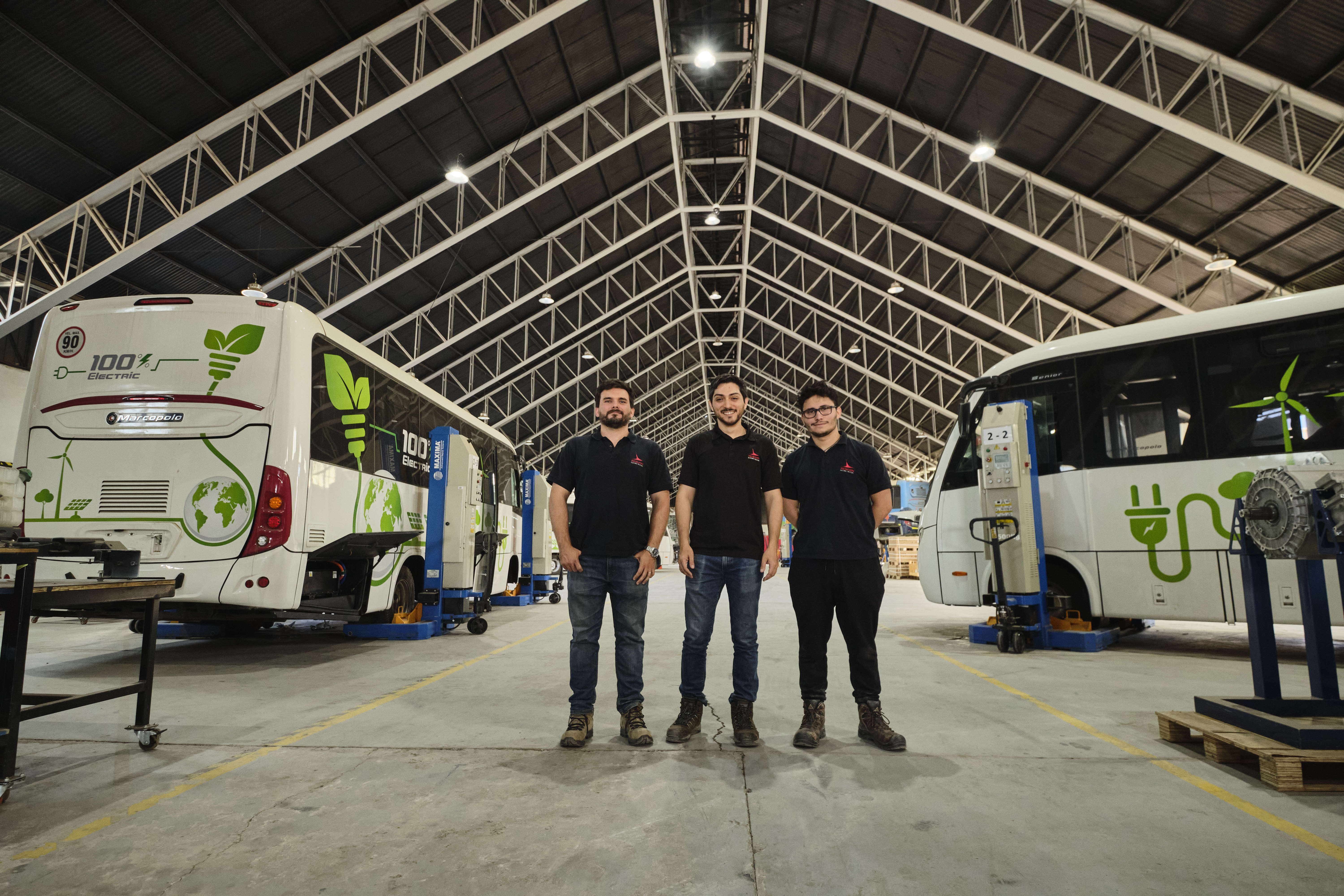
Located almost on the outskirts of Rancagua, on a wide esplanade and housed in what was once a mill, today transformed into a vast warehouse-type construction, is the base of operations of Reborn Electric Motors. None other than the first Chilean manufacturer of electric buses.
The young company, born in 2016 as a retrofit service (converting vehicles with combustion engines to electric), in 2020 made a commitment to move from conversions to the manufacture of zero-kilometre vehicles.
Today, with more than a hundred vehicles operating for Codelco and other companies, it achieved the milestone of exporting its first unit abroad, specifically Brazil, which becomes quite a feat for the tiny national manufacturing industry.
In conversation with Entreprenerd, Felipe Cevallos Becker, CEO and co-founder of Reborn, explains how it was possible to create advanced manufacturing in Chile, something considered unprofitable and uncompetitive by many, and future plans to internationalize the company and electrify the transport of the regions in Chile.
Follow us on: 
- Felipe, it has been said a lot that manufacturing technology in Chile is not convenient because of Asian competition and logistics, but you bet on the opposite...
–Well, today we are already manufacturing vehicles in Chile. It’s a reality. We have already won important contracts and we already have fleets in place. Beyond focusing on the problems, we see the strengths that the country has: a lot of potential, a lot of engineering, a lot of very intelligent heads and trained to develop local technology. That is the main thing and today we are the example that this can be done in Chile in a serious way.

But what does it mean to manufacture a zero-kilometer vehicle in Chile? in simple words, what Reborn does is receive the shell, add the components to it, and also the software. By shell we mean the bodies, which arrive from Brazil thanks to an alliance with Mercedez Benz and Marco Polo. The team then assembles the innards with a mix of imported and on-site parts, as well as loading the software designed entirely by them and taking care of reliability testing and quality controls.
They currently have two designs: the Queltehue and the Tricahue. Both have 200 kilometers of range, and a fast-charging technology that “fills the pond” in 45 minutes. At the El Teniente mine in the O’Higgins Region alone, there are already 72 Queltehue and 32 Tricahue buses operating, in addition to an installed infrastructure of 32 electric chargers between the mine and Rancagua.

- What’s the most complex thing to make the business scale to a point where it’s profitable and competitive?
-Ugh, it’s a mixture of everything. A factory has to handle several very complex factors. Even more so for us who set it up in the covid era, because the logistical problems forced us to do a whole redesign of things. The big difference here in Chile is that we don’t have so much industrial tradition, so there aren’t so many cases to take as an example. You have to invent everything as the processes arise.
- Do you plan to stay in the mining industry and large corporations, or expand to other industries and the private public?
-We mainly got into mining because it’s more of a niche business. Then we saw that there was more potential to be able to enter with a customized product for this market, which was specially designed for these more complex operations. As we continue to gain volume, the goal is also to be able to support regions to move to electric vehicles. Today Santiago has a gigantic fleet of electric buses, but we see that in regions there is still a lack of this electrification and we want to contribute with the development of buses specially designed for the regions of Chile.
- For a company, what would be the value of acquiring vehicles from a Chilean company, versus other Asian manufacturers?
-Our buses today are designed by and for the reality in Chile. Designed so that people can be seated for rural and urban transport, with USB, wifi, air conditioning; They are bodies that have been operating in the country for 20 or 30 years, we know that they work well for the reality of the streets. So we’re taking a solution that already works, which is what we know meets the needs as an ideal product, but making it electric. That, and all the software optimization bonuses that are also ours. In addition, the main challenge, our goal, is to be able to continue growing. We don’t just want to stay in the Chilean market, but we are also expanding to other countries and, in fact, we are very happy because we already made our first export this year of an electric bus.
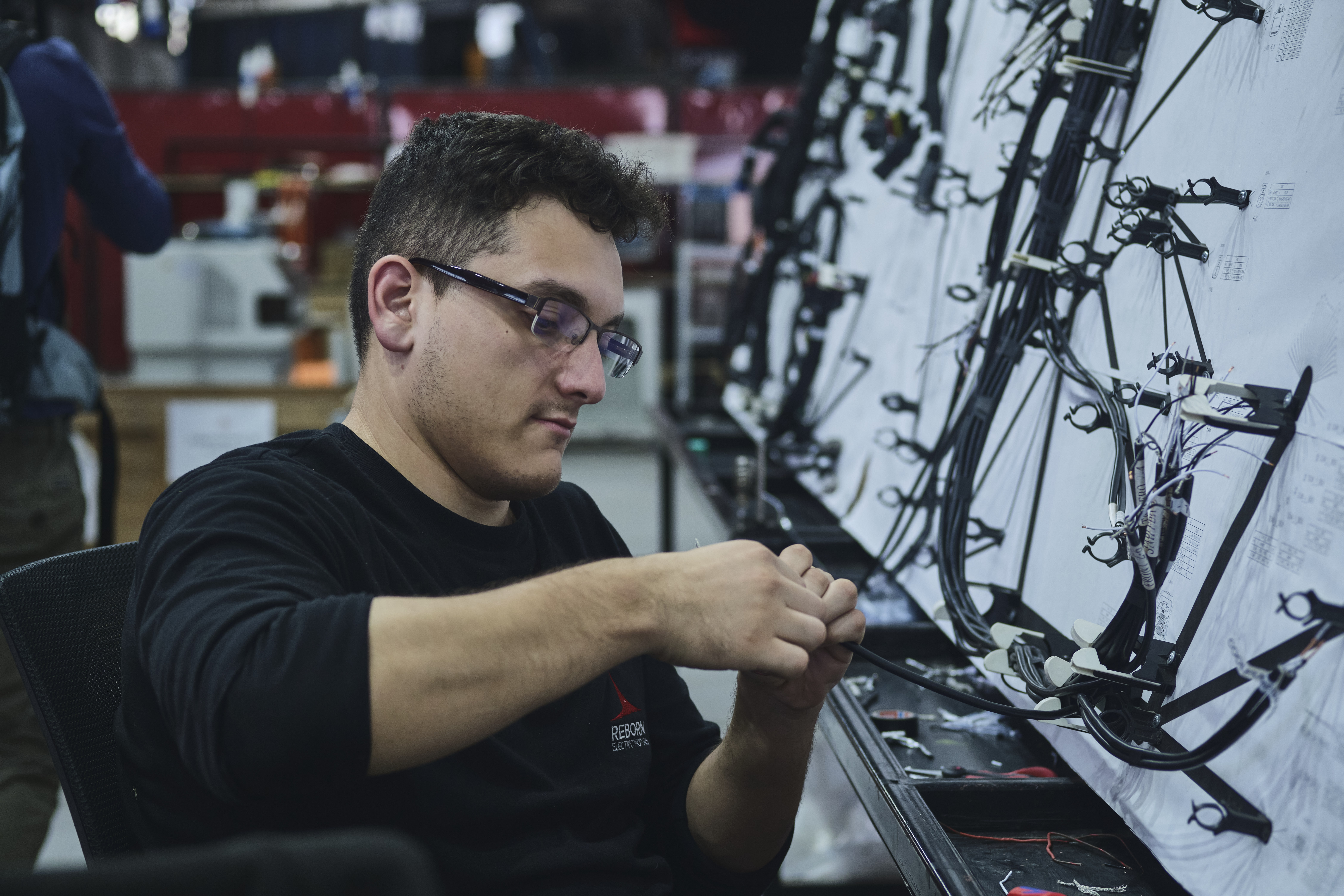
Another important milestone for the Chilean manufacturer is the public-private partnership signed at the end of 2023, between Colbún, Angloamerican, Corfo, Fundación Chile, the National Pilotage Center and Reborn, to develop the first green hydrogen bus made in Chile. According to Cevallos, it is already in the digital and component design stage, and is expected to be manufactured by the end of the year, and fully operational during the first half of 2025.
The CEO of Reborn highlights that “this taxibus will be a vehicle with a much greater autonomy than an electric vehicle, in the order of 600 kilometers per charge. It will be powered by green hydrogen, so it will be zero emissions because the by-product it will generate, instead of generating CO2, is water. Strictly speaking, it is equivalent to an electric vehicle, in terms of having an electric motor, having an electric compressor, electric steering, etc. It’s a hydrogen-based electric vehicle, basically.”
Will Reborn open to other types of vehicles? Although the team says that in the short term they will continue to be dedicated to buses, in the future they have the challenge of reaching other commercial niches with other types of vehicles.